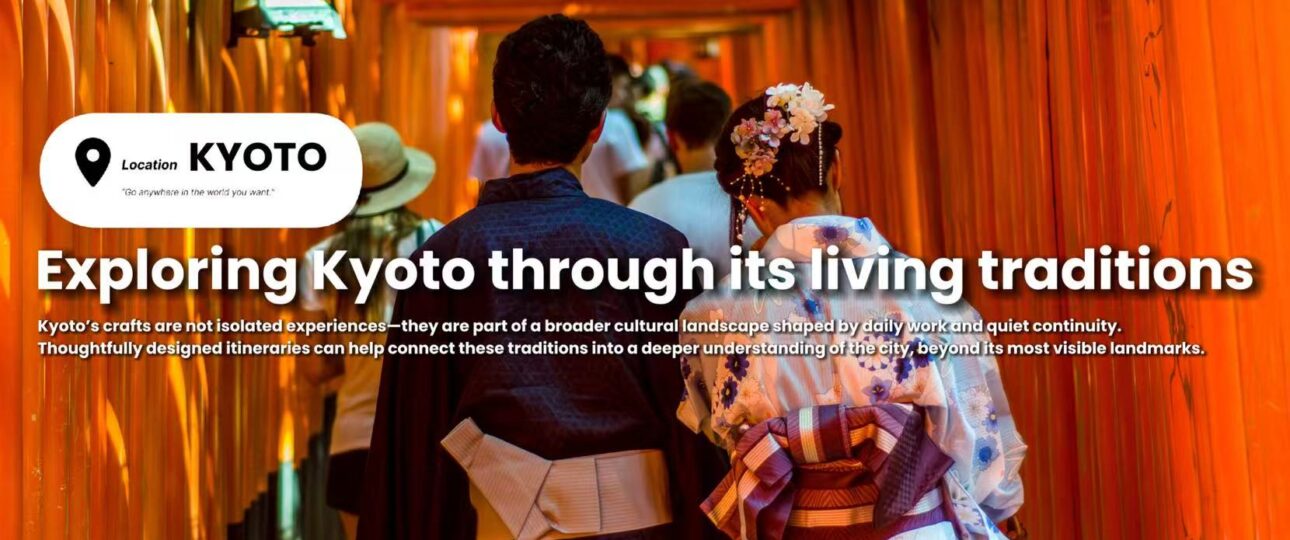
Kyoto is often praised for preserving tradition. Yet preservation alone does not explain why certain crafts here continue to feel alive. What makes Kyoto unique is not just what has been kept, but what is still used.
Beyond the temples and seasonal spectacles, Kyoto remains a working city of artisans. Weavers, dyers, brewers, and makers continue practices passed down over generations—not as performances for visitors, but as part of daily life. To understand this side of Kyoto is to see tradition not as nostalgia, but as a living system.
Tradition as Function, Not Display
Many of Kyoto’s traditional crafts were never intended as art objects. They were tools of daily life: textiles worn and repaired, fans used for comfort, incense burned for ritual and mood.
What distinguishes Kyoto is the way these crafts remain embedded in contemporary routines. A kimono woven on a centuries-old loom may still be worn at a family ceremony. Incense blended by hand continues to shape the atmosphere of temples and homes. Sake brewed in small batches still accompanies meals rather than sitting behind glass.
In Kyoto, tradition survives because it remains useful.

For travelers seeking a personalized and stress-free Japan journey, our consultation service offers expert guidance every step of the way.
Nishijin: Weaving a City’s Memory
The Nishijin district, located north of the city center, has been the heart of Kyoto’s textile production for centuries. Known primarily for its luxurious silk weaving, Nishijin is less a single destination than an entire neighborhood shaped by craft.
Small workshops are woven into residential streets. The sound of looms can sometimes be heard from behind sliding doors. While some studios welcome visitors, many operate quietly, focused on fulfilling commissions rather than showcasing history.
Walking through Nishijin offers insight into how craft shapes urban form. Streets are narrow by design, buildings functional, and rhythms dictated by work rather than tourism.
Fans, Paper, and the Poetry of Everyday Objects
Kyoto is also home to makers of everyday objects elevated through design and restraint.
Traditional fans, for example, were not decorative souvenirs but practical tools for daily use. Their construction balances lightness, strength, and subtle beauty. Even today, fan makers produce items intended for use—not display.
The same philosophy extends to paper and incense. Kyoto’s washi paper supports calligraphy, packaging, and ritual use. Incense, blended with care, defines spaces through scent rather than sight.
These crafts reflect a broader Kyoto aesthetic: quiet, restrained, and deeply intentional.
Sake Brewing as Living Heritage
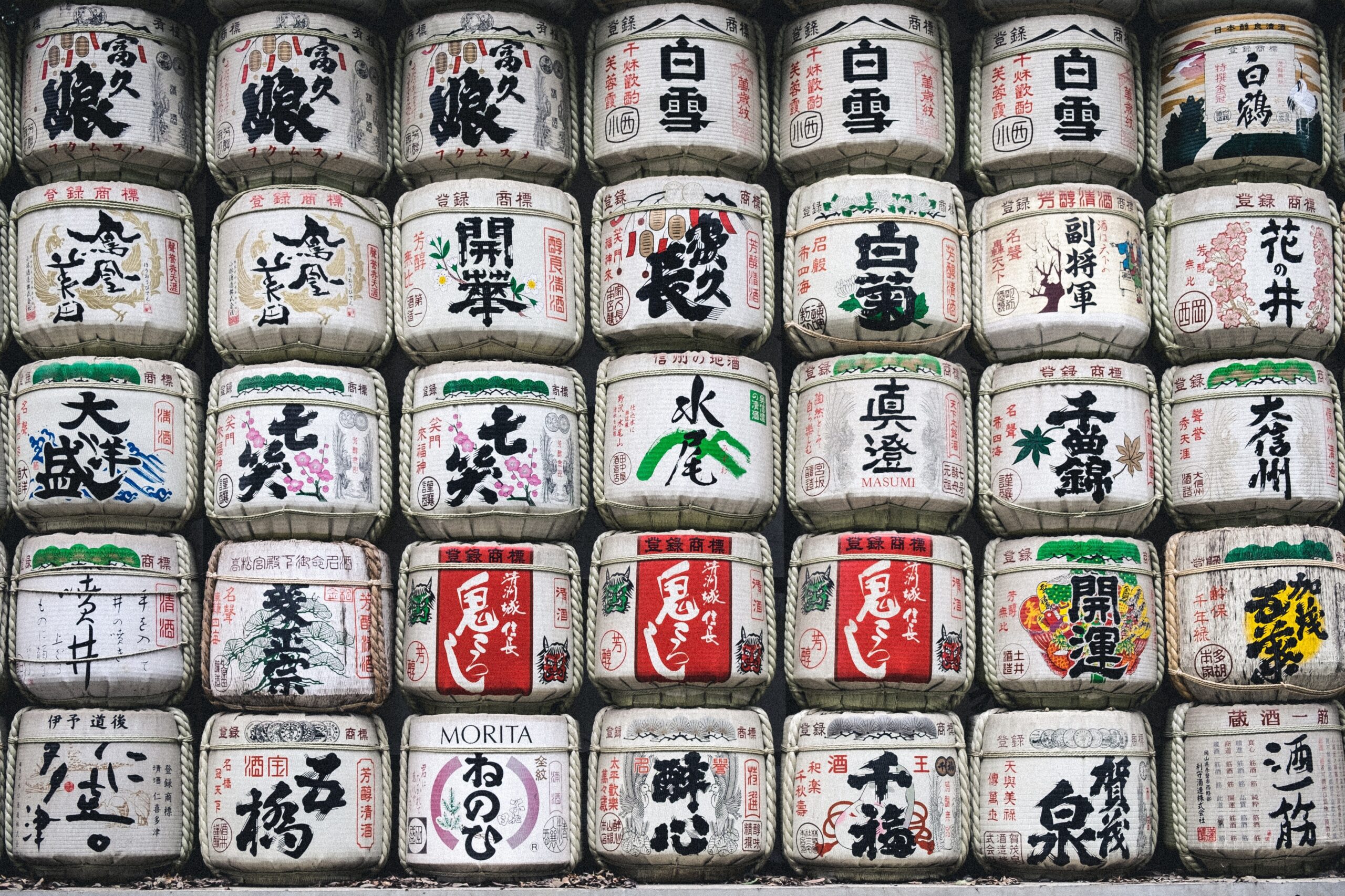
Kyoto’s Fushimi area is known for its soft water and long history of sake brewing. While larger breweries exist, many smaller producers continue methods that prioritize flavor and balance over scale.
Sake here is not treated as a historical artifact. It is consumed, discussed, and refined. Brewing schedules follow natural cycles, and techniques are adjusted subtly from year to year.
For visitors, understanding sake as a living craft reveals how tradition adapts—guided by experience rather than rigid rules.
Why These Crafts Still Matter
Kyoto’s traditional industries survive not because they resist change, but because they evolve carefully.
Materials shift. Tools improve. Yet core principles remain: respect for process, attention to detail, and a belief that quality emerges over time. These values resonate strongly with travelers interested in sustainability, craftsmanship, and cultural continuity.
Experiencing these crafts firsthand—whether through observation or guided visits—offers a perspective that goes far beyond shopping or sightseeing.
If you’d like help planning a smooth and well-organized trip to Japan, our travel consultants are here to assist.
Experiencing Kyoto’s Crafts Thoughtfully
Accessing Kyoto’s living crafts requires sensitivity. Many workshops are small, private, and focused on work rather than visitors. Experiences are most meaningful when approached with context and respect.
A carefully planned itinerary can help bridge this gap, introducing travelers to craftspeople in ways that feel natural rather than intrusive. Timing, introductions, and understanding workshop rhythms all shape the experience.
For those drawn to the idea of culture as something lived rather than displayed, Kyoto’s crafts offer one of the city’s most compelling stories.

Create Your Own Travel Booking With Us
We specialize in crafting unforgettable journeys across Japan. Whether you’re a solo traveler, couple, or family, our expert planners, multilingual guides, and customer care team ensure your adventure is seamless and unique — from first click to final destination.
Create your travel booking website with us — and let your story unfold in Japan.