Among all the cities in Japan, few places embody the meeting of cultures as vividly as Nagasaki. For centuries, this coastal city on the western edge of Kyushu served as Japan’s rare gateway to the outside world. While much of the country remained closed to foreign influence during the Edo period, Nagasaki continued to interact with merchants, missionaries, and scholars from across Asia and Europe.
As a result, Nagasaki developed a cultural landscape unlike anywhere else in Japan. Chinese temples stand near European-style churches, Western sweets are sold beside traditional Japanese confectioneries, and streets once walked by Dutch traders now welcome visitors from around the globe.
Exploring Nagasaki today means experiencing a city where East and West have blended together for hundreds of years, creating a fascinating cultural mosaic.
Dejima: The Island That Connected Japan to the World
One of the most important historical sites in Nagasaki is Dejima, a small artificial island that once served as Japan’s only official window to Europe during the Edo period.
Built in 1636, Dejima was originally created to house Portuguese traders. After Christianity was banned in Japan, the Portuguese were expelled, but the Dutch were allowed to remain. For more than two centuries, Dutch merchants conducted trade with Japan from this tiny island under strict supervision.
Despite its small size, Dejima became a crucial bridge between Japan and the Western world. Scientific knowledge, medical practices, and technological innovations entered Japan through Dutch traders and scholars working here.
Today, the island has been carefully restored, allowing visitors to step back into the atmosphere of an international trading post from the 18th and 19th centuries. Reconstructed warehouses, residences, and offices offer a glimpse into daily life on the island, while exhibits explain how Western knowledge gradually spread throughout Japan.
Walking through Dejima feels like visiting the birthplace of Japan’s early globalization.
Chinese Influence and the Vibrant Chinatown
Long before European traders arrived, Nagasaki had already built strong ties with China. Chinese merchants began settling in the city as early as the 15th century, establishing communities that played a major role in trade and cultural exchange.
This influence remains visible today in Nagasaki’s lively Chinatown, one of the oldest and most colorful Chinese districts in Japan.
Bright red gates mark the entrances to the area, while lanterns hang above narrow streets lined with restaurants, dessert shops, and traditional Chinese-style buildings. The district is particularly vibrant during festivals such as the Lantern Festival, when thousands of illuminated lanterns transform the streets into a glowing sea of color.
Food is also a central part of the Chinatown experience. Many of Nagasaki’s most famous dishes originated from Chinese culinary traditions that were adapted locally over time.
Walking through this neighborhood offers a glimpse into the long-standing relationship between Japan and China, preserved in everyday life.
For travelers seeking a personalized and stress-free Japan journey, our consultation service offers expert guidance every step of the way.
Western Architecture on Japanese Hillsides
Another remarkable feature of Nagasaki is its collection of Western-style architecture dating back to the 19th century.
After Japan reopened to the world in the mid-1800s, foreign diplomats, merchants, and missionaries settled in Nagasaki. Many built homes on the city’s scenic hillsides overlooking the harbor, creating neighborhoods filled with European-style residences.
One of the most famous examples is the former home of Scottish merchant Thomas Glover. Known today as Glover Garden, the area contains several historic Western houses relocated and preserved as part of an open-air museum.
The architecture reflects Victorian design, complete with wooden verandas, large windows, and elegant gardens. From the hillside, visitors can enjoy sweeping views of Nagasaki Harbor, just as foreign residents did more than a century ago.
These buildings represent a period when Japan was rapidly modernizing and absorbing ideas from around the world.
A City of Churches
Nagasaki is also known for having the highest concentration of Christian churches in Japan. Christianity first arrived here with Portuguese missionaries in the 16th century, and the region soon became one of the country’s most important centers of the faith.
Although Christianity was later banned for over two centuries, many believers continued to practice their religion in secret. After the ban was lifted in the 19th century, churches began appearing across the region once again.
Today, visitors can see beautiful examples of church architecture throughout Nagasaki. Some are large cathedrals built in European style, while others are small wooden churches overlooking quiet fishing villages.
These buildings stand as powerful reminders of the region’s complex religious history and the perseverance of communities that preserved their faith for generations.
Culinary Traditions Born From Cultural Exchange
Nagasaki’s unique history is also reflected in its food. Because the city served as an international trading port, many foreign ingredients and cooking techniques found their way into local cuisine.
One of the most famous examples is Champon, a noodle dish originally created by Chinese immigrants for students studying in Nagasaki. The dish combines thick noodles with pork broth, seafood, and vegetables, resulting in a hearty and flavorful meal.
Another well-known specialty is Sara Udon, a dish of crispy noodles topped with stir-fried vegetables and seafood in a savory sauce.
Even desserts tell a story of cultural exchange. Castella, a sponge cake introduced by Portuguese traders in the 16th century, has become one of Nagasaki’s most beloved sweets. Today, bakeries across the city continue to make Castella using traditional recipes.
Sampling these dishes offers travelers a delicious way to experience Nagasaki’s multicultural heritage.
A Living Crossroads of Cultures
What makes Nagasaki so special is not just its history but how that history continues to shape the city today.
Unlike many historical destinations where cultural influences are preserved only in museums, Nagasaki’s international heritage is still part of everyday life. Chinese restaurants, Western-style houses, Japanese shrines, and Christian churches exist side by side, reflecting centuries of interaction between different cultures.
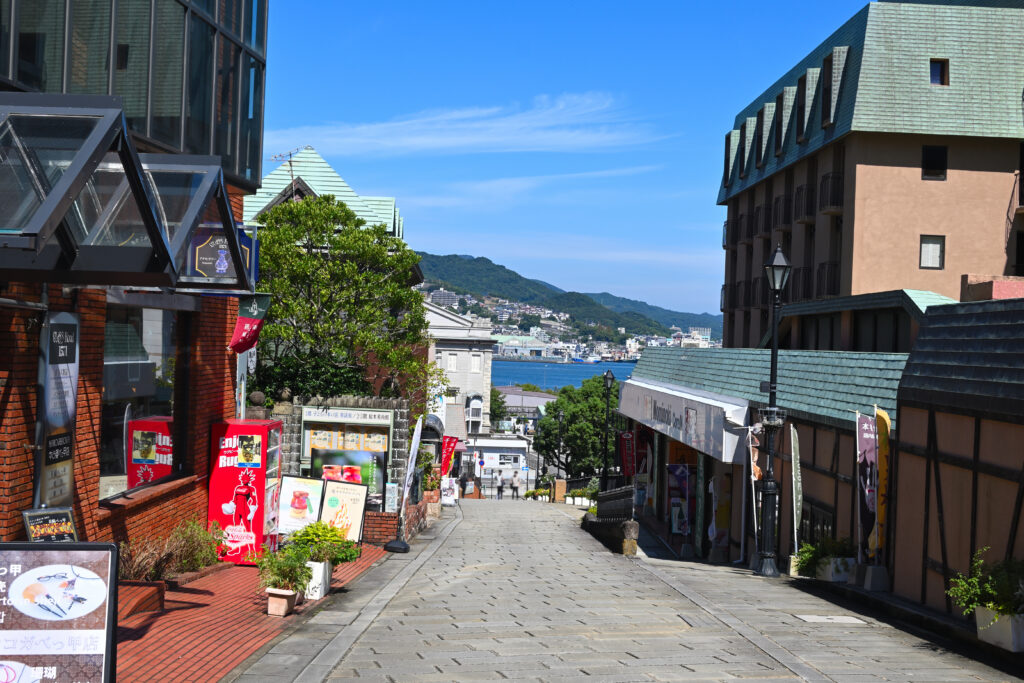
The city’s layout itself tells this story. Narrow streets climb steep hillsides, opening onto viewpoints overlooking the harbor where ships once arrived from distant lands.
For travelers interested in understanding how Japan connected with the wider world, Nagasaki offers an experience unlike any other destination in the country.
If you’d like help planning a smooth and well-organized trip to Japan, our travel consultants are here to assist.
Why Nagasaki’s Cultural Fusion Still Matters Today
In a world where globalization often feels recent, Nagasaki reminds us that cultural exchange has been shaping societies for centuries.
Here, traders, missionaries, and travelers once crossed oceans to share ideas, technologies, and traditions. Those encounters left a lasting mark on the city’s architecture, religion, cuisine, and daily life.
Today, visitors walking through Nagasaki can still feel the echoes of those encounters in the city’s streets, buildings, and food.
For travelers seeking a deeper understanding of Japan’s relationship with the outside world, Nagasaki stands as one of the most fascinating places to explore.

Create Your Own Travel Booking With Us
We specialize in crafting unforgettable journeys across Japan. Whether you’re a solo traveler, couple, or family, our expert planners, multilingual guides, and customer care team ensure your adventure is seamless and unique — from first click to final destination.
Create your travel booking website with us — and let your story unfold in Japan.