Yes, but genuine private day-use onsen are limited. A facility that accepts day visitors may still have only communal baths, while many private baths are reserved exclusively for overnight hotel or ryokan guests.
Travelers often want a private onsen because they are visiting Kyoto as a couple, traveling with children, have tattoos or feel uncomfortable using a gender-separated communal bath. The challenge is that several different bathing experiences are frequently described online as “private onsen.”
This guide explains whether a private bath without a hotel stay is realistically possible and what you must verify before paying. For a more detailed search by area and bathing plan, use our Kyoto private onsen day-use guide .
Is a Private Kyoto Onsen Without a Hotel Stay Possible?
Yes, but availability is much more limited than ordinary day-use bathing. Some ryokan offer a private bath as part of a lunch, dinner or daytime hospitality plan. Other facilities may let day visitors reserve a bath for a fixed period without using a guest room.
However, many Kyoto hotels advertise private baths that are available only to registered overnight guests. Rooms with an open-air bath also normally require an overnight room reservation.
Day-Use Onsen Does Not Automatically Mean Private Onsen
| Bath type | No overnight stay? | Completely private? | Best suited to |
|---|---|---|---|
| Public day-use onsen | Usually | No | Visitors comfortable with communal, gender-separated bathing |
| Reservable private bath | Sometimes | Usually, during the reserved period | Couples, families and travelers wanting privacy |
| Private bath with a meal plan | Sometimes | Depends on the plan | Travelers wanting a longer ryokan experience without staying overnight |
| Hotel day room | Sometimes | Only if the room or plan includes a private bath | Travelers wanting several hours of private space |
| Guest room with private onsen | Normally not | Yes | Honeymoons, anniversaries and relaxing overnight stays |
Your Main Private Bath Options Around Kyoto
Reservable Private Bath
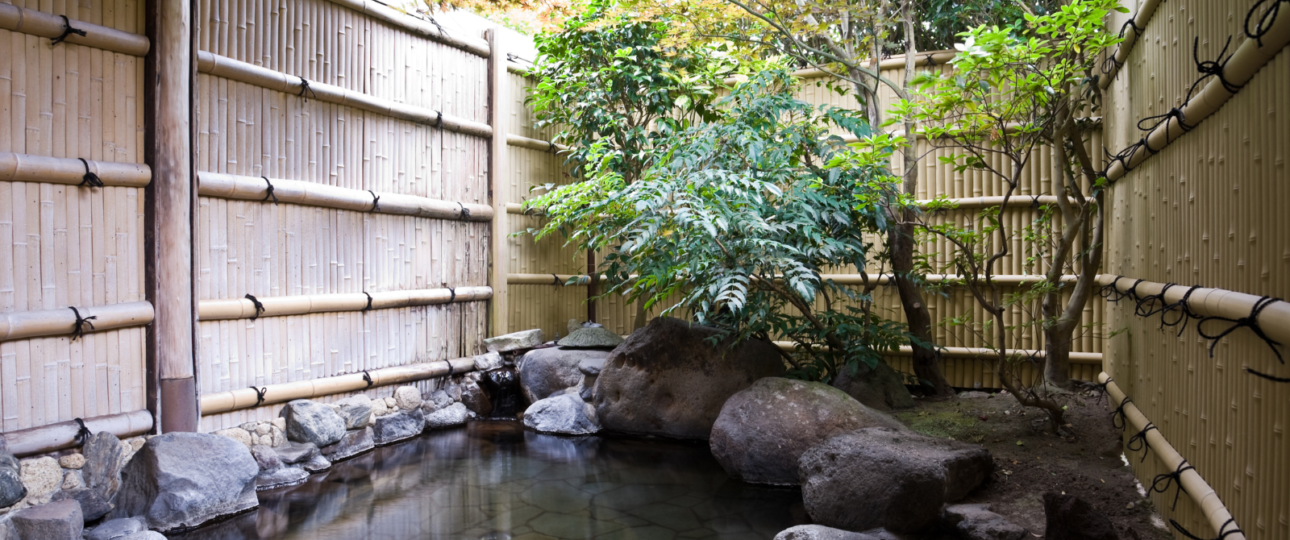
A kashikiri-buro is reserved for your party for a fixed time. This is the most useful option if you want to bathe together without staying overnight.
Confirm that the reservation is open to non-staying visitors rather than only hotel guests.
Bath and Meal Plan
Some ryokan combine lunch or dinner with daytime bath access. These plans may offer a more complete ryokan experience, but not every package includes exclusive use of a private bath.
Hotel Day Room
A daytime room can provide privacy and somewhere to rest. However, the room may contain only a normal bathtub, and communal onsen access may still be separated by gender.
If the water source matters to you, also ask whether the private bath contains natural hot-spring water. A property can have a genuine communal onsen but use ordinary heated water in some private guest-room baths.
Where Should You Look Near Kyoto?
Arashiyama
Arashiyama is one of the easiest areas for combining Kyoto sightseeing with a ryokan or hot-spring experience. Some properties offer selected daytime plans, but private-bath access may depend on the meal package, date and occupancy.
Hanaikada is an onsen ryokan near Togetsukyo Bridge. Check its current packages and contact the property before assuming a private bath is available to day visitors. Visit the official Hanaikada website .
Kurama
Kurama is useful for travelers who want natural scenery and a traditional hot-spring day trip. Day-use bathing and a fully private bath are not the same experience, so verify the current bath arrangement before traveling.
Check operating days, temporary closures, prices and available plans on the official Kurama Onsen website .
Ohara and the Kyoto Countryside
Ohara and other rural areas around Kyoto may have traditional inns offering limited daytime hospitality plans. These can be harder to reserve in English, and availability may change according to the season or overnight occupancy.
Lake Biwa and Nearby Kansai Destinations
If you cannot find the right bath inside Kyoto, consider the Lake Biwa area in neighboring Shiga Prefecture. Travelers willing to go farther can also compare established hot-spring destinations such as Arima or Kinosaki.
Kinosaki is particularly known for its seven public bathhouses, which the official tourism site describes as tattoo-friendly. These are primarily public baths rather than a substitute for a private couples bath. Check the official Kinosaki tourism website .
What to Confirm Before Booking a Private Bath
- Can non-staying visitors reserve the bath?
- Will the bath be used only by your party during the booked time?
- Is it natural hot-spring water or ordinary heated water?
- Is the reservation for the bath only, or does it include a daytime room?
- Must you book a lunch or dinner package?
- How many minutes of private bathing are included?
- Are towels, toiletries and changing facilities provided?
- Can partners of different genders use the bath together?
- Are children allowed, and is there a minimum age?
- What is the tattoo policy for the private bath?
- What is the cancellation policy?
“Can I use the private reservable bath as a day visitor without staying overnight?”
Private Onsen Terms You Need to Know
| Japanese term | Meaning | What it tells you |
|---|---|---|
| 貸切風呂 Kashikiri-buro |
Reservable private bath | Usually the most useful term when looking for exclusive bathing time |
| 家族風呂 Kazoku-buro |
Family bath | Often functions like a private bath, but rules vary |
| 日帰り温泉 Higaeri onsen |
Day-use hot spring | Means no overnight stay is required; does not guarantee privacy |
| 客室露天風呂 Kyaku-shitsu rotenburo |
Open-air bath attached to a guest room | Normally requires a room and overnight reservation |
| 日帰りプラン Higaeri plan |
Day plan | May include a room, meal or bath; check the precise inclusions |
Are Private Kyoto Onsen Suitable for Couples, Families and Tattoos?
When Is an Overnight Private Onsen Stay Better?
A daytime private bath works well when Kyoto is already part of a busy itinerary and you want a short bathing experience. An overnight ryokan is usually better when the onsen itself is an important part of the trip.
Compare accommodation options in our guide to private onsen ryokan in Kyoto .
Continue Planning Your Kyoto Onsen Experience
Tell Jatravi your travel dates, group, tattoo considerations and preferred level of privacy. We can include a suitable Kyoto onsen experience in a tailor-made Japan itinerary and provide an initial trip proposal.
Request a Free Initial ProposalFrequently Asked Questions
Can I use a private onsen in Kyoto without staying overnight?
Sometimes. A limited number of ryokan and bathing facilities may accept non-staying visitors for a reservable private bath or a daytime package. Confirm the current plan directly before traveling.
Does day-use onsen mean the bath is private?
No. Day-use means that an overnight stay is not required. The bath may still be communal and separated by gender.
Can couples use a private onsen together in Kyoto?
Couples can usually bathe together when they reserve a genuinely private bath, subject to the property’s rules. Ordinary public onsen are normally separated by gender.
What Japanese term should I search for?
Search for kashikiri-buro, written 貸切風呂, which means a reservable private bath. Also confirm that it is available to day visitors.
Can travelers with tattoos use a private onsen?
A private bath may be easier for tattooed travelers, but tattoo policies still vary. Contact the property before booking rather than assuming privacy automatically means tattoos are accepted.
Is an in-room onsen available without booking a hotel?
Usually not. An in-room onsen is attached to a guest room and normally requires an accommodation reservation. A limited hotel day plan may be an exception.
Bath availability, prices, operating hours, water sources, tattoo policies and access for non-staying guests can change. Check the official facility website and obtain direct confirmation before making a special journey or non-refundable booking.