
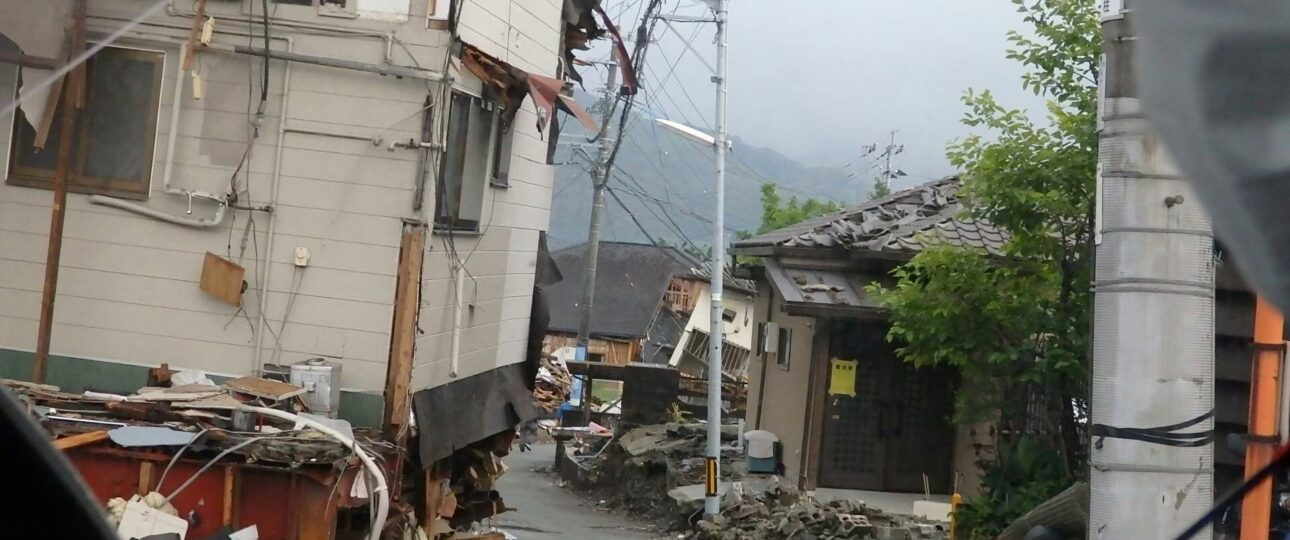
Kumamoto earthquake: what travelers need to know
A major earthquake struck Kumamoto Prefecture on July 28, 2026. Strong aftershocks and significant transportation disruption remain possible. Travelers should postpone non-essential journeys into badly affected areas and follow official weather, railway and local government information.
Confirmed information about the 2026 Kumamoto earthquake
According to the Japan Meteorological Agency, the earthquake occurred in the Kumamoto region at approximately 4:27 p.m. on Tuesday, July 28, 2026. Its provisional magnitude was 7.1, with a provisional depth of 16 kilometres.
Uki City and Hikawa Town recorded a maximum Japanese seismic intensity of 7. Shaking was observed across a wide area of Japan.
JMA reported continuing seismic activity following the main earthquake. Because the affected seismic area is extensive, the location and strength of subsequent earthquakes may vary.
Visitors should use the Japan Meteorological Agency’s Kumamoto earthquake information page for the latest officially confirmed earthquake data.
Current travel and transportation disruption
Railway and road conditions remain subject to rapid change while infrastructure inspections and repairs continue.
In its July 30 update, JR Kyushu announced major disruption affecting the Kyushu Shinkansen. Services between Chikugo-Funagoya and Kumamoto and between Kumamoto and Kagoshima-Chuo were scheduled to remain suspended for the day. Some conventional railway lines and limited-express services were also affected.
| Transport | Reported July 30 situation | What travelers should do |
|---|---|---|
| Kyushu Shinkansen | Major sections through Kumamoto were scheduled to remain suspended on July 30 | Do not travel to the station without checking the latest JR Kyushu update |
| Local and limited-express trains | Selected Kumamoto-area routes were suspended or operating with changes | Check the exact route and train rather than relying on a regional summary |
| Road travel | Inspections, damage and access restrictions may affect individual roads | Use official road information and avoid entering closed or damaged areas |
| Future travel dates | Reopening schedules remain subject to inspection and aftershocks | Reconfirm transportation shortly before departure |
Check the latest JR Kyushu train operation information before beginning any journey.
The Ministry of Land, Infrastructure, Transport and Tourism is publishing updated damage and road-access information through its Kumamoto earthquake disaster information page .
Should tourists visit Kumamoto now?
Non-essential travel into severely affected areas should be postponed while aftershocks, transport disruption and emergency response work continue.
This does not mean that every destination in Kyushu is closed. Conditions vary considerably by city, railway line and road. Travelers should confirm each destination separately rather than assuming that all of Kyushu has the same level of disruption.
Postpone or change the journey if:
- Your train, bus or flight has been cancelled.
- Your hotel or tour operator cannot confirm safe operation.
- The destination is subject to evacuation or access restrictions.
- Your journey would enter an area with damaged roads or disrupted utilities.
- The trip is optional and would interfere with emergency or recovery activity.
If you are already in Kumamoto:
- Follow instructions from local authorities and accommodation staff.
- Keep away from damaged buildings, walls, roof tiles and utility lines.
- Do not enter a restricted area to take photographs.
- Expect aftershocks and keep shoes, identification and essential items accessible.
- Check transport operation before leaving a safe location.
What to do during an earthquake in Japan
Inside a hotel or building
- Drop low and protect your head and neck.
- Take cover beneath a strong table if one is immediately available.
- Stay away from windows, mirrors and objects that may fall.
- Do not run outside while objects are falling.
- Do not use an elevator.
At a railway station
- Move away from the edge of the platform.
- Protect your head from signs, glass and ceiling materials.
- Do not rush toward stairs or exits with the crowd.
- Follow railway and station staff instructions.
Outside
- Move away from walls, glass, signs and utility poles.
- Protect your head with a bag or other available item.
- Move toward an open area only when it is safe to do so.
- Watch for falling roof tiles and broken glass.
Near the coast
- After strong or prolonged shaking, move away from the coast.
- Go toward higher ground or an official tsunami evacuation area.
- Do not approach the sea to check the water.
- Follow all tsunami warnings and evacuation instructions.
What to do immediately after the shaking stops
- Check yourself and nearby people for injuries. Do not move a seriously injured person unless the location remains dangerous.
- Put on shoes. Broken glass and debris may be difficult to see.
- Look for immediate hazards. Be alert for fire, smoke, gas smells, damaged ceilings and unstable furniture.
- Prepare for aftershocks. Move away from visibly damaged structures and keep protecting your head.
- Follow official instructions. Use local government, JMA, railway and hotel announcements.
- Do not block emergency routes. Avoid unnecessary driving or entering damaged districts.
- Preserve phone battery. Send short messages instead of making repeated non-essential calls.
If you are trapped in an elevator
Use the emergency call button and follow the displayed instructions. Do not attempt to force the doors open or leave the elevator without professional assistance.
If your hotel appears damaged
Follow hotel staff or local evacuation instructions. Take identification, medication, suitable footwear and essential belongings only if they are immediately accessible. Do not return to a damaged building until it has been declared safe.
Official information sources
- Japan Meteorological Agency: 2026 Kumamoto earthquake information
- Kumamoto Prefecture: disaster and emergency information
- JR Kyushu: current train operation information
- Ministry of Land, Infrastructure, Transport and Tourism: damage updates
- JNTO Japan Safe Travel Information
Need to adjust a Kyushu itinerary?
Jatravi can help reorganize routes and accommodation around confirmed transportation conditions. Availability and reopening cannot be guaranteed.
Review My Japan Travel PlanFrequently asked questions
When did the 2026 Kumamoto earthquake happen?
The main earthquake occurred at approximately 4:27 p.m. on July 28, 2026, in the Kumamoto region.
How strong was the Kumamoto earthquake?
JMA reported a provisional magnitude of 7.1 and a maximum Japanese seismic intensity of 7 in Uki City and Hikawa Town.
Are aftershocks still possible?
Yes. JMA advises areas that experienced strong shaking to remain alert for approximately one week, particularly during the first two to three days.
Is the Kyushu Shinkansen operating normally?
No. Major sections through Kumamoto were suspended on July 30. Travelers must check the latest JR Kyushu information because operation plans may change.
What should I do if an earthquake happens in a hotel?
Protect your head and neck, stay away from windows and falling objects, and take cover beneath a strong table if one is nearby. Do not use an elevator.
Should tourists travel to Kumamoto now?
Non-essential travel into severely affected areas should be postponed while aftershocks, transport disruption and emergency response activity continue. Check each destination separately.



[…] For current information about the July 2026 Kumamoto earthquake, aftershock risk and Kyushu transportation, read our Kumamoto Earthquake 2026 travel and safety update . […]
[…] Do not infer that the entire area is open or closed from one property’s announcement. Read our Kumamoto Earthquake 2026 travel update for current regional information. Quick answer: Stay one night if you want a ryokan dinner, a […]