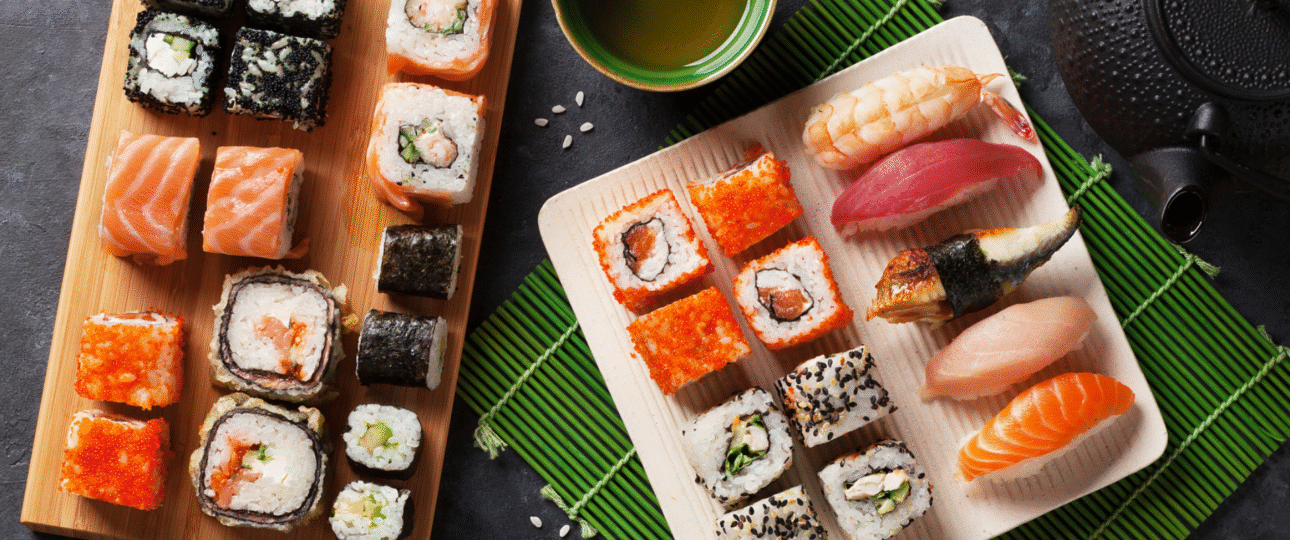
Japan is one of the best countries in the world for food lovers. From sushi and ramen to wagyu beef, street snacks, seasonal sweets, and regional dishes, every city has something delicious to discover.
If this is your first trip to Japan, the choices can feel overwhelming. This guide introduces 15 must-try Japanese foods, including what they are, where to try them, and why they are worth adding to your itinerary.
Quick List: Famous Foods to Try in Japan
- Sushi
- Ramen
- Wagyu Beef
- Tempura
- Soba
- Udon
- Okonomiyaki
- Takoyaki
- Yakitori
- Tonkatsu
- Kaiseki Cuisine
- Onigiri
- Matcha Sweets
- Japanese Curry
- Hokkaido Seafood
1. Sushi
Sushi is probably the most famous Japanese food worldwide, but eating sushi in Japan is a completely different experience. The rice, freshness of the fish, balance of vinegar, and seasonal toppings are all carefully prepared.
First-time visitors can try sushi at many levels, from casual conveyor belt sushi restaurants to high-end omakase counters. In Tokyo, areas such as Ginza, Tsukiji Outer Market, Toyosu, and Shinjuku are popular choices.
If you are nervous about ordering, conveyor belt sushi is a comfortable starting point. For a more special experience, reserve a sushi course where the chef chooses the best pieces of the day.
2. Ramen
Ramen is one of Japan’s most loved comfort foods. A bowl usually includes noodles, soup, sliced pork, egg, bamboo shoots, green onion, and other toppings. The flavor changes greatly depending on the region and soup base.
Common ramen styles include shoyu ramen, miso ramen, shio ramen, tonkotsu ramen, and tsukemen. Tokyo has many famous ramen shops, while Sapporo is especially known for rich miso ramen and Fukuoka is famous for tonkotsu ramen.
Many ramen restaurants use ticket machines at the entrance. You buy a ticket first, hand it to the staff, then wait for your bowl. It is fast, casual, and perfect for lunch during sightseeing.
3. Wagyu Beef
Wagyu beef is one of Japan’s most luxurious foods. It is known for its beautiful marbling, soft texture, and rich flavor. Famous types include Kobe beef, Matsusaka beef, Omi beef, Hida beef, and Miyazaki beef.
You can enjoy wagyu in several ways, such as steak, yakiniku barbecue, sukiyaki, shabu-shabu, or even wagyu sushi. For first-time visitors, a wagyu steak course or sukiyaki dinner is a memorable choice.
If you want a premium wagyu experience, reservations are strongly recommended, especially in Tokyo, Kyoto, Osaka, and Kobe.
4. Tempura
Tempura is made by lightly battering and frying seafood, vegetables, mushrooms, and seasonal ingredients. Good tempura should be crispy, delicate, and not greasy.
Popular tempura ingredients include shrimp, white fish, eggplant, pumpkin, lotus root, shiitake mushrooms, and sweet potato. Tempura can be served as a course meal, with rice, or on top of soba or udon noodles.
For a casual meal, try tempura over rice, called tendon. For a more refined experience, visit a tempura counter where each piece is fried and served one by one.
5. Soba
Soba are Japanese buckwheat noodles. They can be served cold with dipping sauce or hot in a light broth. Soba is especially popular in places such as Tokyo, Nagano, and Kyoto.
Cold soba is refreshing in summer, while hot soba is comforting in winter. Many restaurants also serve soba with tempura, duck, grated yam, or mountain vegetables.
Soba is a good choice if you want a lighter meal during your trip. It is also a great option between heavier meals like ramen, wagyu, or tonkatsu.
6. Udon
Udon are thick wheat noodles with a soft and chewy texture. They are usually served in a warm broth, but cold udon is also popular in summer.
Sanuki udon from Kagawa is especially famous, but you can find excellent udon throughout Japan. Common toppings include tempura, green onion, egg, beef, curry, and fried tofu.
Udon is simple, filling, and family-friendly. It is also a good option for travelers who want something warm and easy to eat after a long day of sightseeing.
7. Okonomiyaki
Okonomiyaki is a savory Japanese pancake made with cabbage, batter, egg, meat or seafood, and toppings such as sauce, mayonnaise, bonito flakes, and seaweed powder.
Osaka and Hiroshima are the two most famous places to try okonomiyaki. Osaka-style okonomiyaki mixes the ingredients together, while Hiroshima-style okonomiyaki is layered and often includes noodles.
Many okonomiyaki restaurants cook the dish on a hot plate in front of you. It is fun, casual, and a great dinner choice for families or groups.
8. Takoyaki
Takoyaki are round, bite-sized balls filled with octopus and cooked in a special mold. They are usually topped with takoyaki sauce, mayonnaise, bonito flakes, and seaweed powder.
Osaka is the best-known city for takoyaki. You can find it at street stalls, shopping streets, festivals, and casual restaurants. Dotonbori is one of the easiest places for travelers to try it.
Be careful when eating takoyaki right after it is served. The outside may look ready, but the inside can be extremely hot.
9. Yakitori
Yakitori means grilled chicken skewers. Different parts of the chicken are grilled over charcoal and seasoned with salt or a sweet soy-based sauce called tare.
Common yakitori items include chicken thigh, meatballs, wings, skin, liver, and green onion skewers. Many yakitori restaurants also serve vegetables, rice bowls, and small side dishes.
Yakitori is a great evening food, especially in lively areas such as Shinjuku, Shibuya, Yurakucho, and Osaka’s drinking districts. It is casual, flavorful, and easy to share.
10. Tonkatsu
Tonkatsu is a breaded and deep-fried pork cutlet. It is crispy on the outside and juicy inside, usually served with shredded cabbage, rice, miso soup, pickles, and a thick savory sauce.
There are different cuts of pork, such as rosu, which is richer and fattier, and hire, which is leaner and softer. Some restaurants also serve premium pork brands from different regions of Japan.
Tonkatsu is easy to enjoy and suitable for travelers who want a satisfying meal without complicated ordering.
11. Kaiseki Cuisine
Kaiseki is a traditional Japanese multi-course meal. It focuses on seasonal ingredients, beautiful presentation, balance, and delicate flavors. Kyoto is one of the best places to experience kaiseki.
A kaiseki meal may include appetizers, sashimi, soup, grilled fish, simmered dishes, rice, pickles, and dessert. Each dish is usually small, carefully prepared, and connected to the season.
Kaiseki is recommended for travelers who want a special cultural dining experience. It is often served at ryokan, traditional restaurants, and high-end Kyoto dining spots.
12. Onigiri
Onigiri are Japanese rice balls, often wrapped in seaweed and filled with ingredients such as salmon, tuna mayonnaise, pickled plum, kelp, or cod roe.
They are simple, affordable, and easy to find at convenience stores, supermarkets, train stations, and specialty shops. For travelers, onigiri is one of the most useful snacks during a busy sightseeing day.
If you are taking a train ride or leaving early in the morning, grabbing a few onigiri is a very Japanese and practical choice.
13. Matcha Sweets
Matcha is powdered green tea, and Japan has many matcha desserts that are perfect for sweet lovers. Popular options include matcha ice cream, matcha parfait, matcha cake, matcha mochi, and matcha chocolate.
Kyoto, especially Uji, is one of the most famous places for matcha. You can find traditional tea houses, dessert cafés, and souvenir shops selling high-quality matcha products.
Matcha sweets are also excellent souvenirs. Many visitors buy matcha-flavored snacks at department stores, airport shops, convenience stores, and Don Quijote.
14. Japanese Curry
Japanese curry is thick, mild, slightly sweet, and very comforting. It is usually served with rice and toppings such as pork cutlet, chicken, beef, vegetables, or fried seafood.
Compared with Indian or Thai curry, Japanese curry is less spicy and more stew-like. It is popular with both adults and children, making it a good family-friendly meal.
You can find Japanese curry almost everywhere, from casual chain restaurants to local cafés and specialty curry shops.
15. Hokkaido Seafood
Hokkaido is famous for some of the best seafood in Japan. Popular items include crab, sea urchin, scallops, salmon roe, squid, and fresh sushi bowls.
If you visit Sapporo, Hakodate, Otaru, or other parts of Hokkaido, seafood should be one of your top food priorities. Morning markets are especially popular for fresh seafood rice bowls.
Even if you are not visiting Hokkaido, you can still find Hokkaido seafood restaurants in Tokyo, Osaka, and other major cities.
Best Cities in Japan for Food Lovers
Different cities in Japan offer different food experiences. If food is one of the main reasons for your trip, it is worth planning your route around regional specialties.
| City | Recommended Foods |
|---|---|
| Tokyo | Sushi, ramen, tempura, yakitori, wagyu |
| Osaka | Takoyaki, okonomiyaki, kushikatsu, street food |
| Kyoto | Kaiseki, matcha sweets, tofu cuisine, traditional desserts |
| Hokkaido | Seafood, miso ramen, dairy desserts, soup curry |
| Fukuoka | Tonkotsu ramen, motsunabe, street stalls |
Tips for Eating in Japan as a First-Time Visitor
- Make reservations for popular restaurants. Many famous restaurants in Tokyo, Kyoto, and Osaka require advance booking.
- Check opening days. Some small restaurants close on irregular days or only open for dinner.
- Carry some cash. Credit cards are more widely accepted now, but small local restaurants may still prefer cash.
- Be aware of meal times. Lunch often runs from around 11:30 to 14:00, while dinner may start from 17:00 or 18:00.
- Tell the restaurant about allergies early. Vegetarian, halal, gluten-free, and allergy-friendly meals can require advance planning in Japan.
FAQ: Japanese Food for First-Time Visitors
What is the most famous food in Japan?
Sushi and ramen are two of the most famous Japanese foods for international visitors. However, wagyu beef, tempura, udon, soba, okonomiyaki, and matcha sweets are also very popular.
What food should I try first in Japan?
For a first trip, start with sushi, ramen, wagyu beef, tempura, and either okonomiyaki or takoyaki. These dishes are easy to find and give you a good introduction to Japanese food culture.
Is Japanese food expensive?
Japanese food can be very affordable or very expensive depending on where you eat. Convenience store meals, ramen, curry, udon, and onigiri are budget-friendly. Sushi omakase, wagyu, and kaiseki are usually more expensive.
Is it hard to find vegetarian food in Japan?
Vegetarian food is available in Japan, especially in major cities, but it requires planning. Many soups and sauces use fish-based broth, so it is better to check menus carefully or book restaurants in advance.
Do I need restaurant reservations in Japan?
For casual restaurants, reservations are often not necessary. However, popular sushi restaurants, wagyu restaurants, kaiseki restaurants, and small local favorites may require advance reservations.
Want to Plan a Japan Food Trip Without Stress?
Japan has incredible food, but restaurant reservations, language barriers, transport, and timing can be difficult for first-time visitors.
Jatravi can help you create a private Japan itinerary with local food experiences, English-speaking guides, private transportation, restaurant suggestions, and smooth travel between Tokyo, Kyoto, Osaka, Hokkaido, and more.
Whether you want sushi in Tokyo, street food in Osaka, matcha in Kyoto, or seafood in Hokkaido, we can help you build a trip around the foods you want to try most.
Final Thoughts
Japanese food is one of the biggest highlights of traveling in Japan. From simple convenience store onigiri to premium wagyu beef and traditional kaiseki cuisine, every meal can become part of your travel memory.
If you are visiting Japan for the first time, try to include a mix of casual local meals, regional specialties, street food, and at least one special dining experience. This will give you a much richer and more delicious journey.