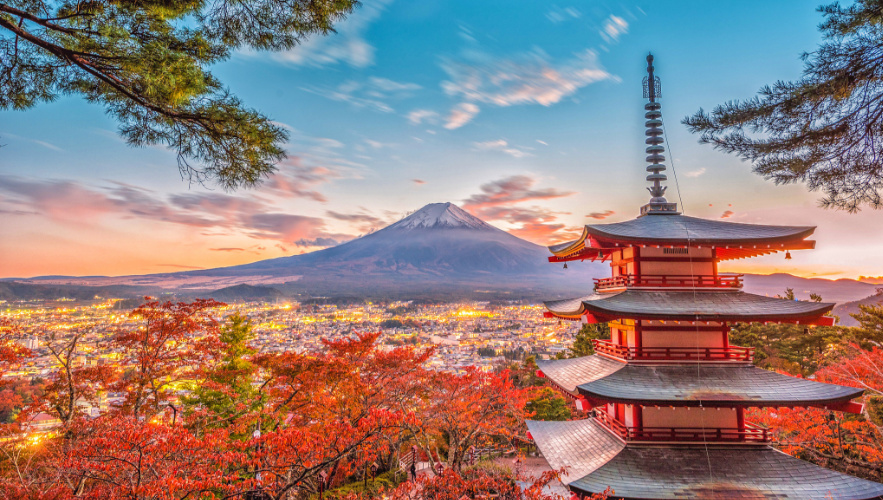
This 10-day Japan autumn itinerary combines Tokyo, the Mt. Fuji area, Kyoto, Nara and Osaka. It is designed for first-time visitors who want seasonal scenery without turning every day into a rushed search for one perfect maple tree.
10-Day Japan Autumn Itinerary Overview
| Day | Base | Main focus | Planning note |
|---|---|---|---|
| 1 | Tokyo | Arrival and easy neighborhood walk | Keep the first day flexible after the flight. |
| 2 | Tokyo | Gardens, traditional districts and city views | Choose one foliage garden rather than several distant parks. |
| 3 | Tokyo | West Tokyo or a seasonal day trip | Adjust according to current colour and weather. |
| 4 | Mt. Fuji area | Lake scenery, autumn colour and onsen | An overnight stay gives more than one chance for mountain views. |
| 5 | Kyoto | Transfer and central Kyoto | Do not overload the day with several temples after travel. |
| 6 | Kyoto | Eastern Kyoto temples and historic streets | Start early and walk between nearby areas. |
| 7 | Kyoto | Arashiyama, northern Kyoto or quieter alternatives | Select the area using live colour and congestion information. |
| 8 | Kyoto or Osaka | Nara day trip | An early start provides a quieter park and temple experience. |
| 9 | Osaka | Osaka food, neighborhoods and city views | Use this as a lighter day after temple-heavy sightseeing. |
| 10 | Osaka | Final sightseeing and departure | Match the schedule to the departure airport and flight time. |
Start in Tokyo
Tokyo works well as the first base because it gives you time to recover from the flight while combining gardens, food, neighborhoods and autumn day trips. Three nights allow a flexible arrival day and two useful sightseeing days.
On Day 1, check in and stay close to the hotel. Choose a manageable neighborhood walk, dinner and an early night rather than scheduling a long attraction list immediately after arrival.
On Day 2, combine one major garden with nearby cultural or urban sightseeing. Possible autumn settings include traditional landscape gardens, ginkgo avenues and large city parks. Current colour should determine the exact choice.
Day 3 can focus on western Tokyo, Mt. Takao, Kamakura, Nikko or another seasonal destination. Do not automatically choose the most famous day trip. Travel time, weekend traffic and current colour may make a closer alternative more rewarding.
Stay Overnight Around Mt. Fuji
Travel from Tokyo to Lake Kawaguchiko or Hakone for a night outside the city. Lake Kawaguchiko is the more foliage-focused choice, while Hakone offers a broader combination of onsen, museums, transport experiences and mountain scenery.
An overnight stay is preferable to a rushed return trip when Mt. Fuji views matter. Visibility can change during the day, and autumn colour does not guarantee a clear mountain view.
Consider an onsen hotel or ryokan, but check room type, meal arrangements, access from the arrival point and luggage handling. A private vehicle can add value for families, several suitcases or multiple lakeside stops.
Spend Three Nights in Kyoto
Kyoto is the cultural center of this itinerary, but it is also the destination most likely to feel overcrowded during peak autumn periods. Three nights allow you to spread famous locations across several mornings instead of attempting eastern Kyoto, Arashiyama and northern Kyoto in one day.
On Day 5, transfer from the Mt. Fuji area and keep the afternoon relatively simple. Explore a central district, market area, garden or evening neighborhood near your hotel.
Use Day 6 for eastern Kyoto. Select a connected walking route rather than moving between distant temples. An early start is more useful than adding a long list of attractions.
On Day 7, choose Arashiyama, northern Kyoto, Takao, Ohara or a quieter garden route. The correct choice depends on current colour, congestion, mobility and how much time your group wants to spend walking.
Take a Day Trip to Nara
Nara offers temples, parkland and autumn scenery within an easy route from Kyoto or Osaka. Start early for a calmer experience around Nara Park and the major temple approaches.
Instead of rushing through every headline attraction, choose a connected walking area and allow time for gardens or quieter temple grounds. Travelers who prefer slow travel can stay overnight in Nara and continue to Osaka the next morning.
If your group includes young children, seniors or travelers with limited mobility, shorten the walking route and use taxis or a private vehicle for selected sections.
Finish in Osaka
Osaka provides a lively final contrast to Tokyo, Mt. Fuji and Kyoto. Use Day 9 for food, shopping, neighborhoods and city views rather than another full day of temple visits.
Possible combinations include Osaka Castle Park, traditional shopping streets, Umeda, Nakanoshima, Kuromon Market or an evening around Dotonbori. Select areas based on hotel location and your group’s interests.
On Day 10, plan only a short activity if the flight departs later in the day. Leave enough time for airport transportation and international check-in. Travelers departing from Tokyo should add a Tokyo night or use an open-jaw flight plan instead of creating a risky same-day cross-country transfer.
How to Adjust This Japan Autumn Itinerary by Date
Review the Japan autumn leaves timing and destination guide before fixing the route. JNTO also provides an official overview of autumn travel in Japan.
Transport and Luggage Planning
- Use trains between major cities. Tokyo, Kyoto, Nara and Osaka are generally suitable for rail-based travel.
- Consider private transport around Mt. Fuji. It may reduce transfers for families, groups and travelers carrying several bags.
- Forward large luggage. Send selected suitcases between major hotels and travel with a smaller overnight bag when appropriate.
- Check reserved-seat availability. Popular travel dates can increase demand on intercity routes.
- Do not schedule tight rural connections. Mountain roads and buses may be affected by traffic or weather.
- Choose hotels for route efficiency. A slightly less expensive hotel can cost valuable sightseeing time if it is far from useful transport.
Private vehicles are not necessary every day. They are most useful for airport arrivals, Mt. Fuji or rural areas, mobility-conscious groups and days with several luggage-heavy stops.
How to Avoid the Worst Autumn Crowds
- Visit the day’s most important garden or temple close to opening time.
- Use weekdays for Kyoto, Nikko and famous foliage destinations where possible.
- Plan one major seasonal attraction per morning.
- Stay overnight instead of turning every destination into a rushed day trip.
- Keep one quieter alternative for each high-demand area.
- Check current foliage, weather and congestion before making a long detour.
- Do not expect evening illuminations to provide a quiet experience.
How to Customize This 10-Day Autumn Route
This itinerary can be adjusted for families, couples, senior travelers, food-focused visitors, repeat visitors and groups that prefer private transportation.
- Replace one Tokyo day with Nikko, Kamakura or a quieter regional destination.
- Choose Hakone instead of Lake Kawaguchiko for museums and onsen.
- Add Kanazawa between Tokyo and Kyoto.
- Stay overnight in Nara for a slower cultural route.
- Replace Osaka with Hiroshima and Miyajima.
- Add private vehicle days for Mt. Fuji, rural Kyoto or mobility-conscious travel.
- Reduce temple visits and add food, crafts, gardens or seasonal experiences.
Review Jatravi’s private Japan autumn tours for other route styles. The tour Page explains possible custom arrangements; this article remains a sample 10-day itinerary rather than a fixed product.
Related Japan Autumn Planning Guides
Tell Jatravi your travel dates, arrival airport, group size, preferred destinations, hotel style, walking comfort and approximate budget. Our Japan-based team can prepare an autumn itinerary proposal around your dates and interests.
Free enquiry · No payment required · No booking obligation Get My Free Japan ItineraryFrequently Asked Questions
Is 10 days enough for an autumn trip to Japan?
Yes. Ten days is enough for a practical route combining Tokyo, the Mt. Fuji area, Kyoto, Nara and Osaka, although travelers should avoid adding too many distant day trips.
When is the best time for this 10-day autumn itinerary?
Mid-November to early December is generally the most practical period for a Tokyo–Mt. Fuji–Kyoto route. Actual autumn colour changes every year and cannot be guaranteed.
Should I choose Lake Kawaguchiko or Hakone?
Lake Kawaguchiko is more foliage and Mt. Fuji focused, while Hakone offers a broader combination of onsen, museums and mountain travel. Weather and visibility remain variable in both areas.
Can I avoid crowds in Kyoto during autumn?
Kyoto will still be busy during popular periods, but early starts, weekday visits, connected walking routes and smaller gardens can reduce unnecessary crowd exposure.
Do I need a private driver for the whole trip?
No. Trains work well between major cities. Private vehicles are more useful for selected airport transfers, the Mt. Fuji area, rural destinations, luggage-heavy travel and mobility-conscious groups.
Can Jatravi customize this itinerary?
Yes. Jatravi can adjust the route around your travel dates, group, interests, hotel preferences, walking comfort, transport needs and approximate budget.
Does submitting the itinerary form require payment?
No. Submitting the itinerary form is free and does not require immediate payment or create a booking obligation.
Autumn timing, weather, foliage, transport, attraction access and hotel availability can change. This itinerary is a planning example rather than a guarantee of peak colour or a fixed travel package.