
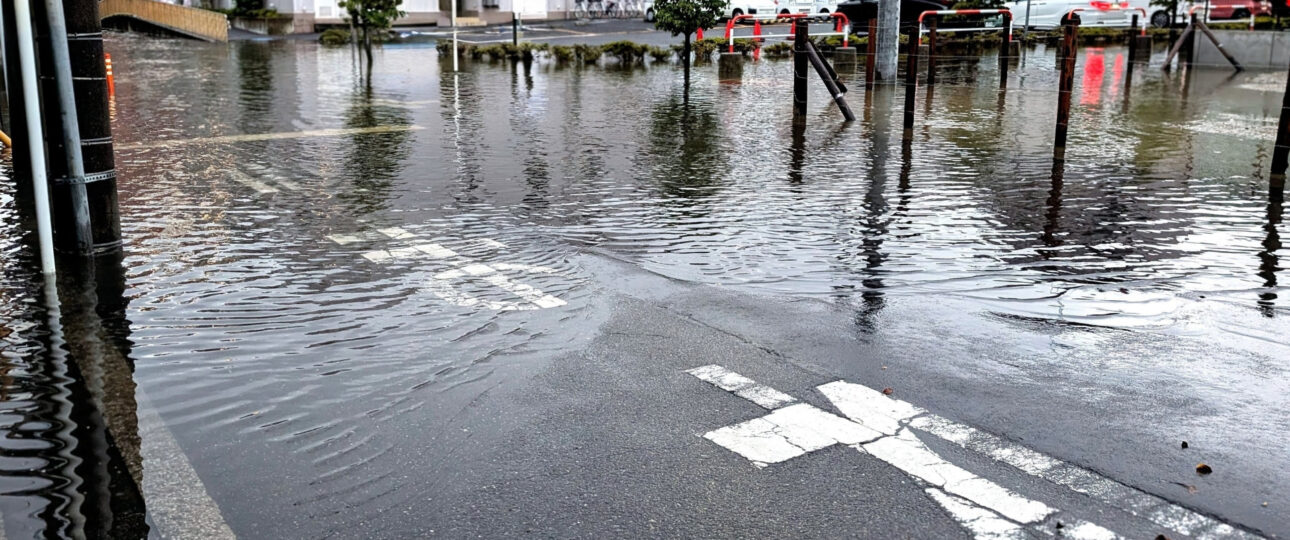
Typhoons can disrupt flights, trains, ferries and outdoor activities, especially from summer into early autumn. This guide explains the main risk months, how to check official warnings and how travelers should respond.
Japan’s main typhoon period is July through October, with August and September requiring particular attention. This does not mean every day is stormy or that every typhoon affects the whole country.
Do not cancel an entire Japan trip solely because a storm appears in an early forecast. Check the timing, affected region, exact transport route and official operator announcements.
When is typhoon season in Japan in 2026?
Typhoons can form in the western North Pacific outside a fixed season, but the period most relevant to Japan travel planning is generally July through October.
Japan Meteorological Agency statistics for 1991–2020 show that approximately 25 typhoons formed during an average year, about 12 approached within 300 kilometers of Japan and around three made landfall. Formation, approaches and landfalls were most concentrated from July through October.
| Travel month | General consideration | Recommended approach |
|---|---|---|
| June | Typhoons are possible alongside Japan’s rainy season. | Check forecasts before island, coastal and mountain travel. |
| July | Typhoon activity becomes more relevant. | Monitor long-distance transport before transfers. |
| August | Historically the month with the highest average number of formations. | Avoid making every important transfer inflexible. |
| September | An important month for approaches and serious disruption. | Keep schedule flexibility and monitor operators. |
| October | Typhoons remain possible, particularly earlier in the month. | Continue checking forecasts for the exact travel dates. |
Typhoon season is not a period of continuous storms. Many visitors travel during August and September without significant disruption. The relevant question is whether a particular storm may affect the regions and transport corridors in your itinerary.
See the Japan Meteorological Agency’s official typhoon statistics for the long-term averages.
Should you cancel a Japan trip during typhoon season?
Usually, no. A possible typhoon shown several days in advance is not, by itself, a reason to cancel an entire trip.
Forecast tracks can change, and Japan covers a large geographical area. A storm affecting Okinawa, Kyushu or western Japan does not automatically mean Tokyo, Hokkaido and every other region will experience the same conditions.
Consider changing a specific part of the trip when:
- An airline or railway announces a cancellation or planned suspension.
- An official warning applies to the destination you intend to enter.
- Your hotel, attraction or tour operator confirms closure.
- The route involves an island, coastline, river, mountain or flood-prone area.
- Local authorities or accommodation staff advise against travel.
Do not cancel everything based only on:
- A social-media screenshot without an official source.
- A predicted track issued many days before the trip.
- A national weather symbol that does not identify the affected region.
- The assumption that one typhoon will stop all transportation in Japan.
Divide the itinerary by date, region and reservation. Change only the portions likely to be affected unless official advice indicates a wider danger.
How to read a Japan typhoon forecast
A forecast cone shows the range of possible positions for the center of a storm. It is not the exact boundary of heavy rain or strong wind. Effects can extend beyond the center, and the predicted route can change.
Check four things:
- Timing: when the storm may approach each destination.
- Region: which prefectures and transport routes may be affected.
- Hazards: rain, flooding, landslides, wind, waves and storm surge.
- Operator decisions: whether the exact flight, train or ferry will operate.
Understanding Japan’s alert levels
| Alert level | Meaning for travelers |
|---|---|
| Level 2 | Confirm local hazards, evacuation routes and the action you would take. |
| Level 3 | People who require additional time or assistance should evacuate from affected areas. |
| Level 4 | People in affected areas should evacuate as directed. |
| Level 5 | A life-threatening situation may already exist. Take immediate protective action. |
How typhoons affect flights, trains and ferries
| Transportation | Possible effects | Where to check |
|---|---|---|
| Flights | Delay, cancellation, aircraft change or airport disruption | The airline website or app using the exact flight number |
| Shinkansen | Reduced service, delay, planned suspension or cancellation | The JR company operating the route |
| Local trains | Delay or suspension due to wind, flooding or inspections | The relevant railway operator |
| Ferries | Earlier and longer cancellation due to sea conditions | The ferry operator for both journeys |
| Highway buses | Delay, diversion or cancellation due to road closures | The bus company or reservation provider |
Navigation apps are useful for everyday route planning but may not immediately display every planned suspension or special timetable. Check the responsible operator directly before leaving the hotel.
If a train is affected, follow our dedicated guide explaining Shinkansen cancellations, refunds, rebooking and alternative routes.
What to do before a typhoon reaches your area
- Monitor the projected timing and region.
- Review cancellation conditions.
- Identify flexible reservations.
- Avoid making rushed decisions.
- Save official transport status pages.
- Move exposed outdoor activities.
- Ask whether the hotel can extend the stay.
- Charge phones and batteries.
- Check the exact flight, train or ferry.
- Confirm late-arrival arrangements.
- Avoid exposed or flood-prone areas.
- Follow current official warnings.
Keep medication, water, simple food, identification, travel documents, charging equipment and essential belongings accessible.
What to do during a typhoon in Japan
During severe weather, the safest option for most visitors is to remain inside a secure hotel or other substantial building unless local authorities instruct them to evacuate.
- Stay away from windows during severe wind.
- Avoid rivers, canals, coastlines, seawalls and mountain paths.
- Do not walk or drive through flooded roads and underpasses.
- Do not make an unnecessary trip to a station after services stop.
- Keep your passport, medication, phone and charger ready.
- Follow local announcements and accommodation staff instructions.
- Evacuate promptly when instructed by local authorities.
What to do after the typhoon passes
Clear weather outside the hotel does not mean that every railway, road, airport and attraction has reopened. Operators may need time to inspect infrastructure and reposition vehicles.
- Confirm the exact every railway, road, airport and attraction has reopened. Operators may need time train or flight before leaving.
- Allow extra time for station crowds and replacement services.
- Check the destination for flooding or access restrictions.
- Reconfirm the arrival time with the next hotel.
- Keep cancellation notices, revised tickets and receipts.
- Check insurance conditions before assuming an expense will be reimbursed.
A transportation cancellation does not automatically require an unrelated hotel, attraction or tour provider to issue a full refund. Each reservation follows its own conditions.
Official information for travelers
Frequently asked questions
When is typhoon season in Japan in 2026?
Should I cancel my Japan trip because of a typhoon forecast?
Does a typhoon affect all of Japan?
What happens if my Shinkansen is cancelled?
Is it safe to stay in a hotel during a typhoon?
Where should tourists check official typhoon information?
Jatravi can design a private itinerary with realistic transfer times, regional alternatives and fewer unnecessary hotel changes.
Plan My Japan Trip
[…] Japan Typhoon Season 2026: Safety and Travel Tips […]
[…] Read the detailed Japan in September guide and Jatravi’s Japan typhoon-season planning guide . […]
[…] If the rain is connected to an approaching tropical storm, use Jatravi’s Japan typhoon season and travel safety guide . […]